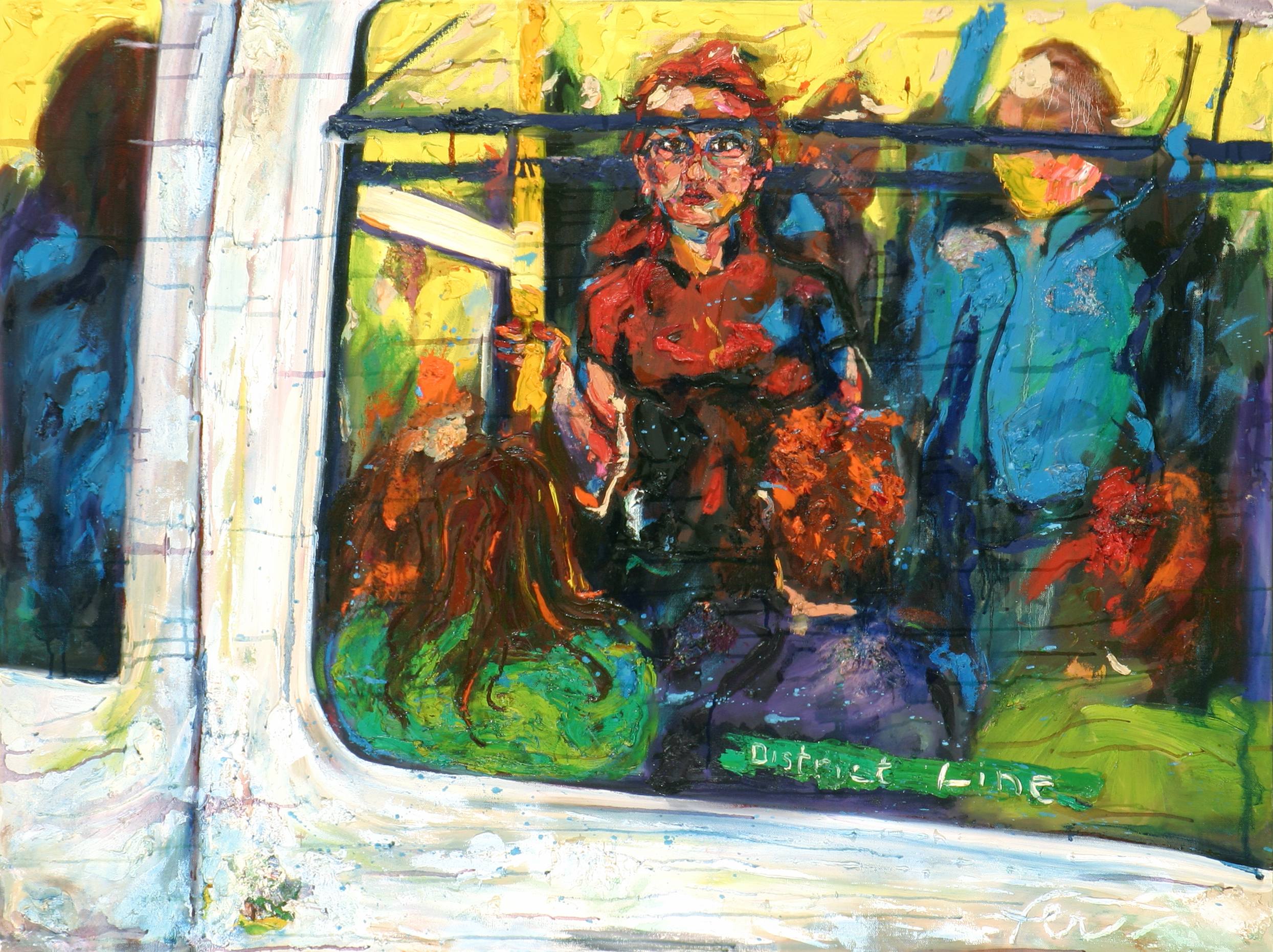
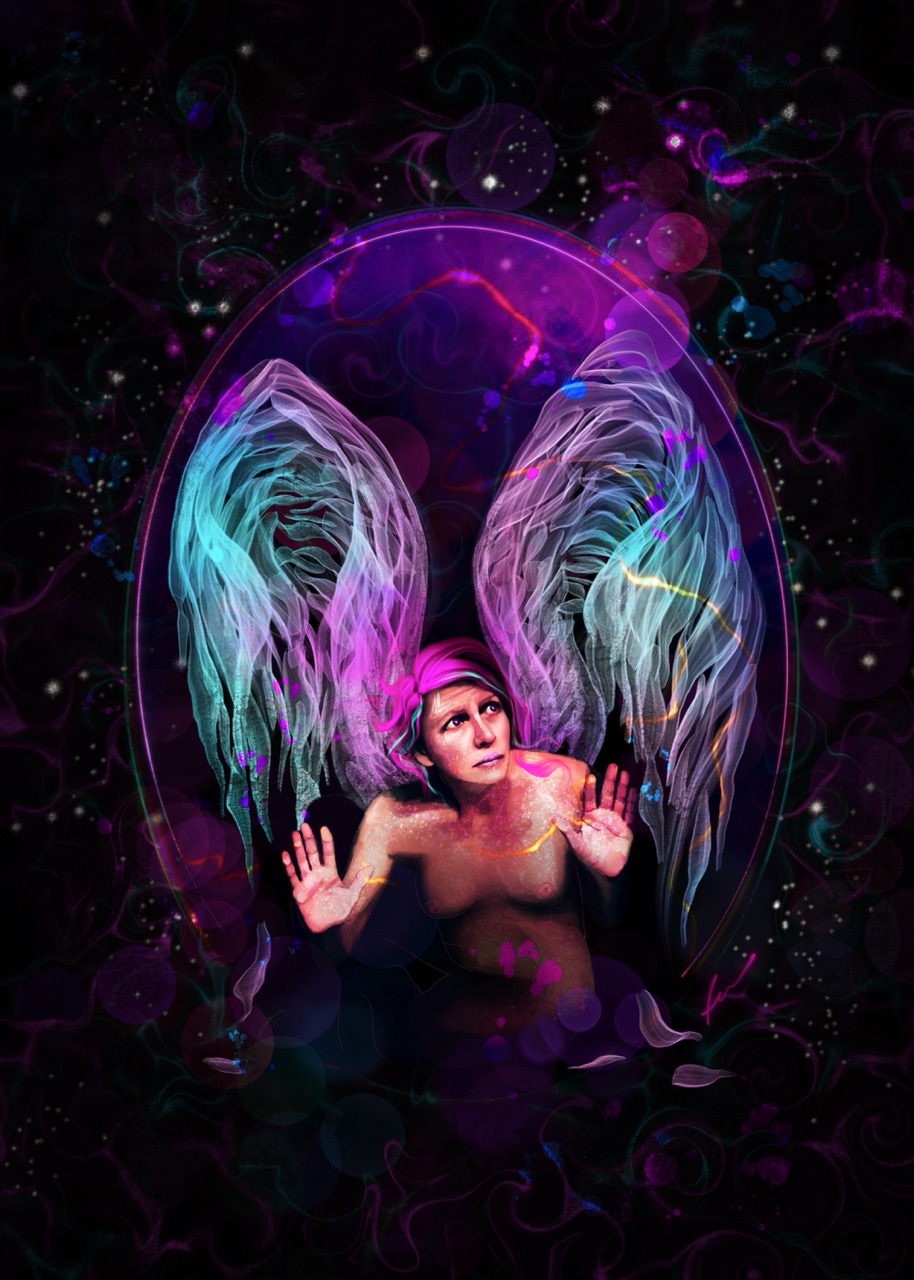
Recently, I entered a small portrait competition and submitted three self-portraits from my archives. They were very different from one another: one was an oil painting, one was a digital painting, and one was an animation. The evolution of the works made me pause.


When I was at university, we had a class where we studied Van Gogh and his self-portraits. I remember finding it fascinating that you could see the changes in his life, his state of mind, and even the way he saw himself, by looking at paintings made years apart. Not just his appearance — you could see inside his head.
Years later, when I was studying at the Art Students League in New York, one of my teachers told me something similar. We were at a party in my home, and he read each of my friends’ personalities just by looking at their paintings.

There is so much that can be revealed through a painting, and seeing those three competition pieces together made me look back at my journey.
So I went back through my archive and pulled together all the self-portraits I could find. I organized them roughly by where I was living and when they were made. Looking at them was almost like looking through an old photo album, except that the images weren’t photographs of what I looked like at the time. They were an expression of how I felt.
Early Works
USA, around 2001
The earliest paintings were made around 2001, after I had left a career in marketing and moved to the United States with my first husband. I didn’t have a work visa, so I couldn’t simply find another job. Instead, I decided to dedicate myself to art.
I had always loved painting, but I didn’t really believe it was something I could pursue as a career. Once I had the opportunity, though, I went all in. I wanted to learn everything I could and make the best work I was capable of making.
I was very ambitious and confident, and delusional enough to believe I could be the next Picasso.


Looking at those early self-portraits now, I can see that confidence in the paintings. They are colorful, energetic, and physical. The figures take up a lot of space, and there is not much hesitation in the brushwork. I was still figuring out how to paint, but I was also figuring out what it meant to call myself an artist.
It wasn’t about getting everything right. It was about pushing my limits and trying to find out what was possible.
Dark Period
London, around 2005
A few years later, we moved to London, and the work changed considerably.

My first marriage had become complicated and intense. My husband had a global career and was rarely home, and I structured my life around being available to travel with him. We traveled extensively, but the lifestyle was exhausting. I became increasingly involved with “sex, drugs, and rock & roll.” We drifted further apart, and eventually I became severely depressed.
When I look at the self-portraits from that period, the first thing I notice is how unsettled they are.
There is still plenty of color, but they often carry deeper, darker tones than my earlier work. The faces don’t feel stable, and the eyes carry the weight of depression. Lines collide. One portrait seems almost to dissolve the figure into the brushwork.


If I had never known the story behind these paintings, I might still have described them as restless or anxious. Knowing what was happening in my life adds another layer, but it doesn’t completely explain the work.
That is one of the things I find most interesting about looking at art.
Biography can give us context, but it shouldn’t replace looking.
The paintings were not a conscious record of my depression. I wasn’t sitting in front of the canvas thinking about how to represent what I was going through. I was simply painting. Yet something about that state of mind inevitably entered the decisions I was making: the way I handled the paint, the colors I chose, the intensity of the image, even the way I looked at my own face.


Post Divorce
Brazil, around 2007
Eventually, my husband gave up on the marriage and sent me back to Brazil. I was too broken to fight for our relationship, so I left.
Yet I still held on to the idea that we would somehow stay together. For a while, I drank every night to avoid confronting my thoughts, until an angel intervened and I bumped into an old teacher who used to be a Buddhist monk. And so I entered a meditation school, beginning a much deeper period of soul-searching, trying to understand myself and reconnect with my spirituality.


The self-portraits from that period are surprisingly different from the London paintings.
There is still a lot of emotion in them, but the work starts becoming highly symbolic. The return to São Paulo opens with a portrait standing in a red polka-dot skirt, with a strong, almost theatrical presence. Then a new era: I portray myself in meditation, surrounded by flowers and patterns.
I was no longer simply trying to paint what I saw in the mirror.
I was using myself to share a spiritual journey of self-learning.


A self-portrait doesn’t have to be an exercise in likeness. The artist can change the body, exaggerate it, surround it with symbols, place it in an imaginary landscape, or turn it into something that represents an idea.
Looking at those paintings, I wonder how much I was painting myself as I was, and how much I was painting the person I hoped I could become.
The Long Wait
Then I stopped painting. For almost ten years.

I simply gave up on art because I couldn’t afford supplies.
For four years, I was a full-time volunteer between a Buddhist temple and a meditation school. After that, I focused largely on murals and tried to find a way to make that work into a career.
So I wasn’t exactly living the life of the artist I had imagined when I was twenty-something.
But I was still making art somehow, and earning an honest living.
That distinction matters to me now because, when you look at the work that came later, it is not about a new artist appearing after a ten-year absence. It was a long wait until a new opportunity arrived.
Back to Art
USA, around 2017

When I moved back to the United States around 2017, I started painting seriously again. For a while, everything seemed to fall into place. My work flourished. I became a co-owner of a gallery, exhibited extensively, and eventually had a solo exhibition at a local museum.
The paintings from this period feel much more expansive and focused on landscapes. The figure is not often present, but it makes a slow comeback. In one painting, she appears only as a small reflection in a mirror, lost within the landscape. In another, she is fighting for a comeback, exploding with creativity and holding several tools like a Hindu goddess.


It was a pivotal moment. The self-portraits were becoming less about presenting myself and more about constructing a world in which I could exist.


Then my second marriage became abusive, and I left with my son.
Once again, my life changed. So did my art.
Digital & Beyond
Post Pandemic and Second Divorce


I began working primarily digitally. There was an obvious practical advantage. Traditional painting is expensive, while digital painting requires an iPad, software, and time. But the real attraction was the freedom.
Digital work allowed me to experiment without worrying about wasting materials. I could animate a painting. I could change proportions, colors, and compositions. I could make several versions of the same idea. I could move between representation and abstraction much more easily.


And the self-portraits evolved from an attempt to mimic physical paintings and textures into fully embracing everything digital can offer, all the way to animated versions.
Looking at the entire archive, that progression feels quite natural.


The Record
The young woman who painted herself in oils wanted to be a famous artist.
The woman painting in London was trying to survive.
The paintings in Brazil became part of a search for meaning.
When I returned to art, I was a mother trying to hold on to something that was still mine.
And eventually, through digital work, I became interested in how far I could explore.
This is where I think back to that university class on Van Gogh.
What fascinated me then was the idea that you could look at a series of self-portraits and see a person changing. I didn’t realize that I would one day have the chance to do the same thing with my own work.
There are things I remember about those periods that I don’t necessarily see in the paintings. There are also things I can see in the paintings that I don’t remember consciously putting there.
That is perhaps the most interesting part.
When we talk about art, we often talk about what an artist intended. But intention is only one part of the story. There are decisions we make consciously, and there are things that emerge through the process of making.


A brushstroke can become more aggressive. A face can become smaller. A figure can move from the center of the canvas into a landscape. Color can become brighter or darker. The artist can become more interested in distortion than resemblance.
Those choices accumulate.
Eventually, they become a record.
Not a literal record of events, and not necessarily a reliable record of what the artist was feeling. But a record of how they were looking at themselves at that particular moment.
That is what I see now when I look through my self-portraits.
I don’t see a collection of paintings that happen to feature the same person.
The face may change. The medium certainly does. The circumstances change dramatically.
I see the multiple versions of a person evolving through those intense life changes.
But somewhere in all of those paintings, there is still the same soul looking back at herself and trying to figure out what she is, how she feels, and what to do with it all.


Leave a Reply